
Warehousing and Transport Services for Manufacturers in India: How to Move Goods from Factory to Market Faster
Blogs
Warehousing and Transport Services for Manufacturers in India: How to Move Goods from Factory to Market Faster
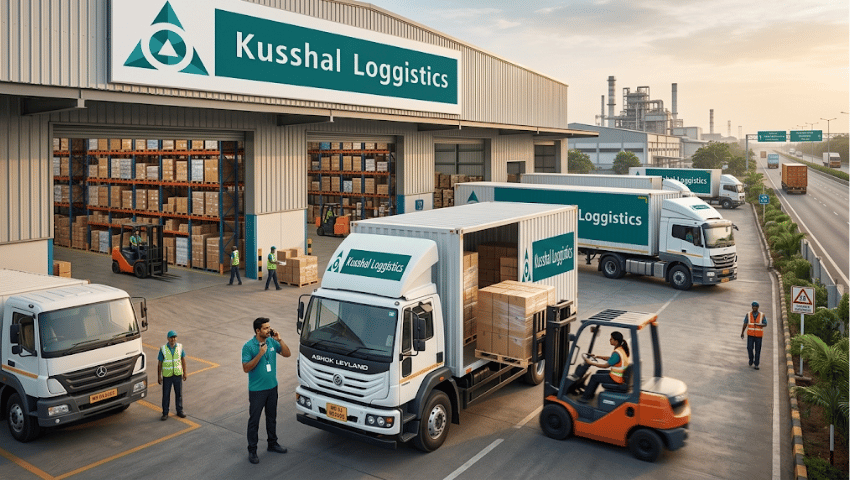
For a manufacturer, completing production is only one part of getting a product into the market. Once the goods leave the production line, another challenge begins. Where will the finished inventory be stored? How quickly can orders be processed? Which vehicle should be assigned? And most importantly, how soon can the goods reach dealers, distributors or customers?
These questions become even more important when a manufacturer starts supplying multiple cities or handling higher order volumes. A delay at the warehouse can affect dispatch, while poor transport planning can leave finished goods waiting for vehicles.
Hence, choosing reliable warehousing and transport services for manufacturers in India can help connect production, storage and distribution into one organised process. Instead of treating warehousing and transportation as two separate activities, manufacturers can manage the journey from factory pickup to final delivery more efficiently.
Why Factory-to-Market Movement Often Becomes Complicated
You might be wondering why goods get delayed even when production is completed on schedule. Well, manufacturing and distribution depend on several activities happening one after another.
Finished goods may first need to be picked up from the factory and moved to a warehouse. They then need to be received, recorded, stored at the correct location and made available for order processing. Once an order arrives, the right inventory needs to be picked, packed, invoiced and kept ready for dispatch.
Transportation begins only after all these activities are properly coordinated. Therefore, using disconnected warehouse and transport services can sometimes make the process harder to control. The warehouse may have the order ready, but the vehicle may not arrive on time. On the other hand, a vehicle may arrive while the shipment is still being prepared.
How Integrated Warehousing and Transportation Can Help
This is where 3PL warehousing and transportation becomes useful for manufacturers. A 3PL partner can take responsibility for several logistics activities instead of the manufacturer coordinating different vendors for storage, inventory handling and transportation.
For example, finished goods can be collected from the manufacturing facility and moved into a managed warehouse. Inventory can then be recorded and stored according to a defined system. As dealer or distributor orders arrive, goods can be processed and dispatched through the same logistics network.
Thus, there are fewer operational gaps between storage and movement.
Start With Efficient Factory Pickup
Moving goods faster does not necessarily mean driving trucks faster. It means reducing unnecessary waiting throughout the supply chain.
Factory pickup is a good example. If vehicles are not planned according to production and dispatch schedules, finished inventory can remain at the plant longer than required. This can occupy valuable space and create congestion around the dispatch area.
Professional goods transportation services in India can help manufacturers plan vehicle movement according to shipment size, destination and delivery requirement. Full Truck Load or FTL movement, for instance, can be useful when a manufacturer has sufficient goods for a particular destination or distribution point.
Store Inventory Where It Can Move Efficiently
Warehousing is not simply about finding an empty place to keep cartons. How goods are stored directly influences how quickly they can be found and dispatched.
Imagine receiving a dealer order and knowing that the stock is somewhere inside the warehouse, but the team needs considerable time to locate it. The inventory is technically available, yet the order still cannot move.
Kusshal Loggistics provides dedicated warehouses, multi-user facilities and in-plant warehouse management depending on the client's requirements. Its warehousing and transport services for manufacturers in India can therefore support businesses that want outsourced storage as well as manufacturers that need professional inventory management within their own facility.
Bring Better Visibility to Inventory
As manufacturing volumes increase, manual inventory management can become difficult. A small mismatch between physical and system stock can eventually affect picking, invoicing and dispatch planning.
Kusshal uses a Warehouse Management System or WMS to manage activities from receipt and putaway to picking, dispatch and returns. Its capabilities include shelf and zone-level inventory tracking, FIFO, cycle counting, replenishment and inventory reporting.
Barcode-based processes and structured inventory controls can also make it easier to know what stock is available and where it is stored. Hence, 3PL warehousing and transportation is not simply about outsourcing labour and space. Technology can also provide greater visibility over the movement of inventory.
Prepare Orders Before the Truck Arrives
Fast transportation cannot compensate for slow order processing. Therefore, the warehouse and transport schedule need to work together.
Kusshal supports several activities within the warehouse, including order processing, packing, kitting, barcoding, labelling, invoicing, scanning and repacking. Depending on the manufacturer's distribution model, operations can also be structured for B2B box-in, box-out movement or piece-level fulfilment.
These value-added warehouse and transport services can reduce the number of separate activities a manufacturer needs to coordinate before an order leaves the facility.
Select the Right Movement for Each Shipment
Not every manufacturer sends the same quantity of goods to every customer. A distributor may require a large shipment, while several dealers in another region may need smaller quantities.
Kusshal's transport and distribution services include:
This flexibility makes goods transportation services in India more useful for manufacturers serving different order sizes, channels and locations.
Make Dealer and Distributor Deliveries More Efficient
Sending one vehicle for every small delivery may not always make commercial sense. Where several dealers or distributors are located along a suitable route, orders can potentially be consolidated.
Kusshal supports milk-run logistics, where multiple deliveries are planned through a multi-stop route. This approach is designed to improve vehicle utilisation, reduce unnecessary movement and maintain more organised distribution schedules.
Therefore, manufacturers looking at warehousing and transport services for manufacturers in India should consider what happens after goods reach the warehouse as well. Dispatch planning and route coordination can have a direct impact on how efficiently products reach the market.
Connect Warehouse Operations With Transport Visibility
One common problem in logistics is that warehouse and transportation data remain separate. The warehouse team knows the stock position, while the transporter knows where the vehicle is.
Kusshal addresses this through WMS and Transport Management System or TMS capabilities. Its TMS supports order tracking, transporter management, vehicle and driver assignment, GPS tracking and automated alerts.
Since warehouse processing and transportation can operate as connected workflows, 3PL warehousing and transportation can provide manufacturers with better visibility from inventory receipt through dispatch and movement.
Do Not Ignore Returns
Goods do not always move in one direction. Returns, rejected shipments and Return to Vendor requirements can create another layer of work for manufacturers.
Kusshal supports reverse logistics together with RTO and RTV processes. Returns can also be tracked at case and SKU level. This allows reverse movement to become part of the logistics process instead of remaining unresolved at warehouses or distribution points.
It is another reason why integrated warehouse and transport services can be more practical than managing each activity through an unrelated vendor.
What If Your Existing Warehouse Is the Problem?
Sometimes manufacturers already have enough warehouse space, but the operation itself is inefficient. Poor layouts, unsuitable storage systems, inventory mismatches or unclear SOPs can slow down dispatches.
Kusshal also provides warehouse consulting covering storage design, warehouse layouts, material flow, SOP development, material-handling equipment, automation, IT selection and logistics-network planning.
Hence, the solution does not always require moving to another warehouse. Improving the existing operation may be the first step towards faster distribution.
Move From Factory to Market With Kusshal Loggistics
Manufacturers should be able to focus on production, product quality and market growth without constantly dealing with inventory mismatches, delayed dispatches and transport coordination.
Kusshal Loggistics brings warehousing, inventory management, fulfilment, WMS, transportation, TMS, distribution and reverse logistics together under an integrated logistics approach. With support for different warehouse models and pan-India goods transportation services in India, the logistics setup can be customised according to the manufacturer's products, order volumes and distribution network.
If your finished goods are spending too much time between the factory and the market, it may be time to review what is slowing them down. Contact Kusshal Loggistics today to discuss your warehousing, factory pickup, inventory handling, FTL movement, dispatch planning and dealer or distributor delivery requirements, and build a more organised route from production to the customer.